By changing everything - ver the past year and a half, we fundamentally reorganized Mito: four companies became one, divisions were eliminated, and we rebuilt the way we work. Here, we share in more detail why - and what this means for anyone working with us.
Brigi CsurgóBalázs Pőcze
Brands & VisibilityCX & LoyaltyEngineering & TechMito Life
How we got here
We started in 2007 with eight people at the intersection of technology and communication.
By 2020, we had grown to one hundred and fifty, and we saw that growth and transparency required separate companies. That's how one Mito became four: Creative, Digital, Next, and Performance.
They worked well. The issue wasn't with them, but with how we could truly offer strategy, creativity, and technology in synergy, from a single source. In the four-company setup, this wasn't perfect.
What actually changed
It didn't start with us, but with our clients. Marketing teams often became smaller, but the tasks didn't.
Pressure on budgets and a focus on efficiency increased, along with in-housing, team augmentation, and the role of regional hubs. We see that what clients need most today is a true partnership, a strategic mindset, flexibility, adaptive collaboration skills, a solution-oriented attitude, and proactivity.
In short: a partner they trust, who understands their business, and from whom they get high-quality, flexible solutions to their problems from a single source.
We responded to this - not by inventing a new direction. It has always been part of Mito's DNA to uniquely connect strategy, creativity, and technology. The past year and a half has been about taking this to a new level: embedding it even further into our daily operations through our new, connected organizational model, organized by industry approach.
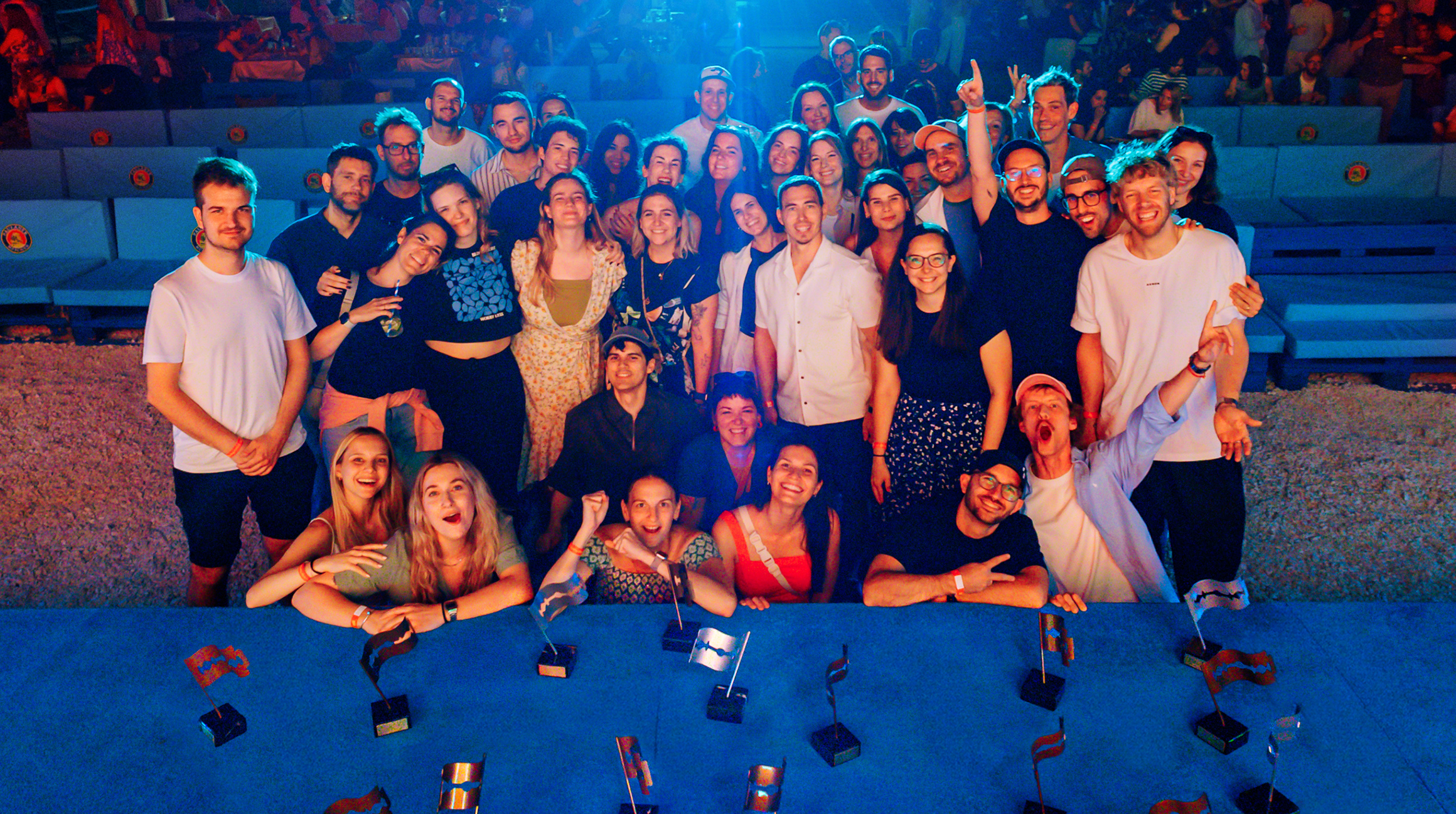
In practice, it looks like this: there is one Mito, with two hundred and thirty people and a single point of entry. We aren't keeping multiple companies under one roof; instead, we've seated experts from different fields around a single table. Business development and client service are organized by industry, professional teams continue to work by competence, but industry thinking permeates the entire operation. And strategy is not a separate division - it sits directly within the teams.
And to be clear: this was not a cost-cutting decision. It did not involve layoffs - in fact, our headcount has grown by a few people since then.
What this means in practice
One point of entry, one brief. You get a holistic solution to your problem from a single source. Creative, media, customer experience, and development teams don't pass tasks back and forth; they work together in the same team. They don't meet in a meeting - they meet in the morning.
Deeper and broader technology solutions. Our technology offering doesn't stop at marketing technology: it includes backend and frontend development, native mobile apps, enterprise system integration, and quality assurance. And we don't get involved at the end of the process: when a creative and a tech expert brainstorm together from day one, the idea turns into a working, scalable product rather than a compromise.
Industry knowledge. We don't start learning about your business from scratch: our teams and our own product developments start from industry logic.
Independently. While this hasn't changed, it's worth stating: there is no network, no parent company telling us what tools to work with, and no global client conflicts preventing us from working on a brand. Decisions are made right where the questions are asked.
And what hasn't changed
Over a year and a half, two hundred and thirty people rebuilt their own work while keeping up with daily operations. It wasn't painless, and not everything worked on the first try - but we went through it together.
The combination of strategy, creativity, and technology has never been a vague promise for us, but the foundation of how we operate - even during the four-company era. Meanwhile, the world has caught up with us: today everyone is talking about this integration. We, however, didn't start just now, and from now on, our organizational structure reflects this as well.
We've always done clever things. From now on, maybe we can work on them just a little bit smarter.