
In 2024, Telekom set a new benchmark for mass-personalized recognition by generating AI-powered, individual sports reports for 8,000 Vivicittá runners on Nemzeti Sport. For 2025, the objective was clear: move beyond celebration and create a scalable motivation mechanism capable of activating even the least active segments of the population.

- Client
- Magyar Telekom
- Capability
- Experience design & delivery · Data, analytics & integration · Production · Social media · Creative
- Industry
- Telecommunications
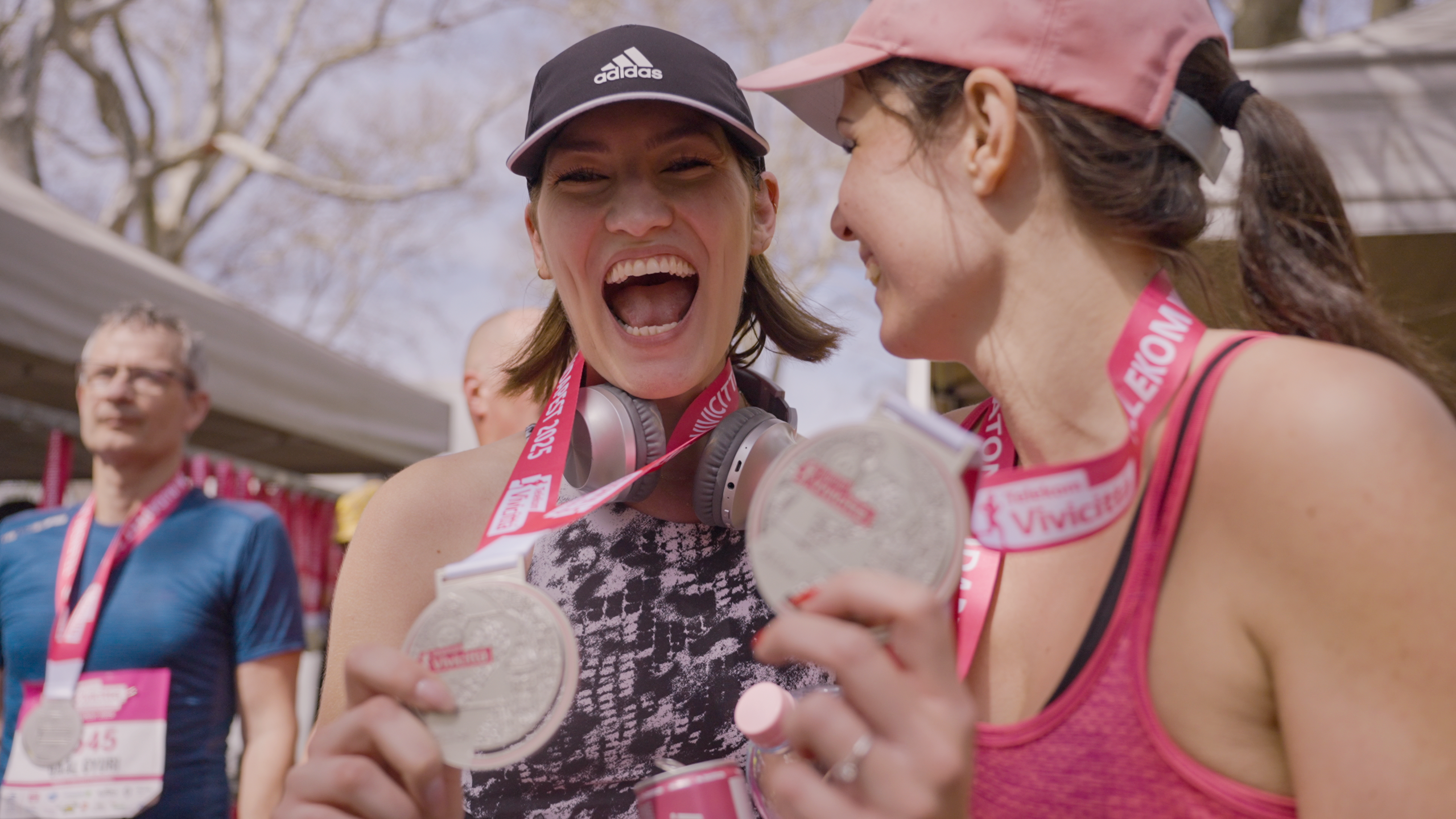
Helping Helplessness
The cultural barrier was well-known. Hungarian sports culture traditionally celebrates only absolute winners. During the Olympics, this mindset surfaced again: national coverage highlighted missing gold medals - even when athletes achieved world-class, second-place results.
Behaviorally, this contributes to learned helplessness: if recognition is limited to world-class performance, those with no chance of “being first” often don’t even start.
Strategic approach
Telekom’s brief was to counter this narrative and encourage everyday people - regardless of age, background, or fitness level - to take their first step toward an active lifestyle.
Our central hypothesis: If recognition is broadened, participation increases.
Instead of rewarding only elite performances, we redefined “best” at a personal and community level. The ambition for the 2025 Vivicittá was to demonstrate, on a large public stage, that every participant can be “the best” in a meaningful, data-driven way.
This required:
○ real-time processing of more than 10,000 runner profiles
○ a heuristic categorization model identifying a unique “best-in” attribute for each participant
○ a communication ecosystem capable of personalizing output at scale, instantly and publicly
Data & Technology
We built a custom multi-attribute algorithm that combined demographic and performance data. Using a maximum of three variables, the model defined the statistically strongest category in which each runner ranked first. This was accomplished for 98% of all participants.
Distribution of categories:
○ ~20% single-attribute winners (e.g., Best Male, Best Runner from Dunaszerdahely, Best Hanna)
○ ~60% two-attribute combinations
○ ~20% three-attribute combinations with minimal overlap
The system operated in real time: as soon as a participant crossed the finish line, their final data set was completed, processed, categorized, and prepared for publication.
Execution
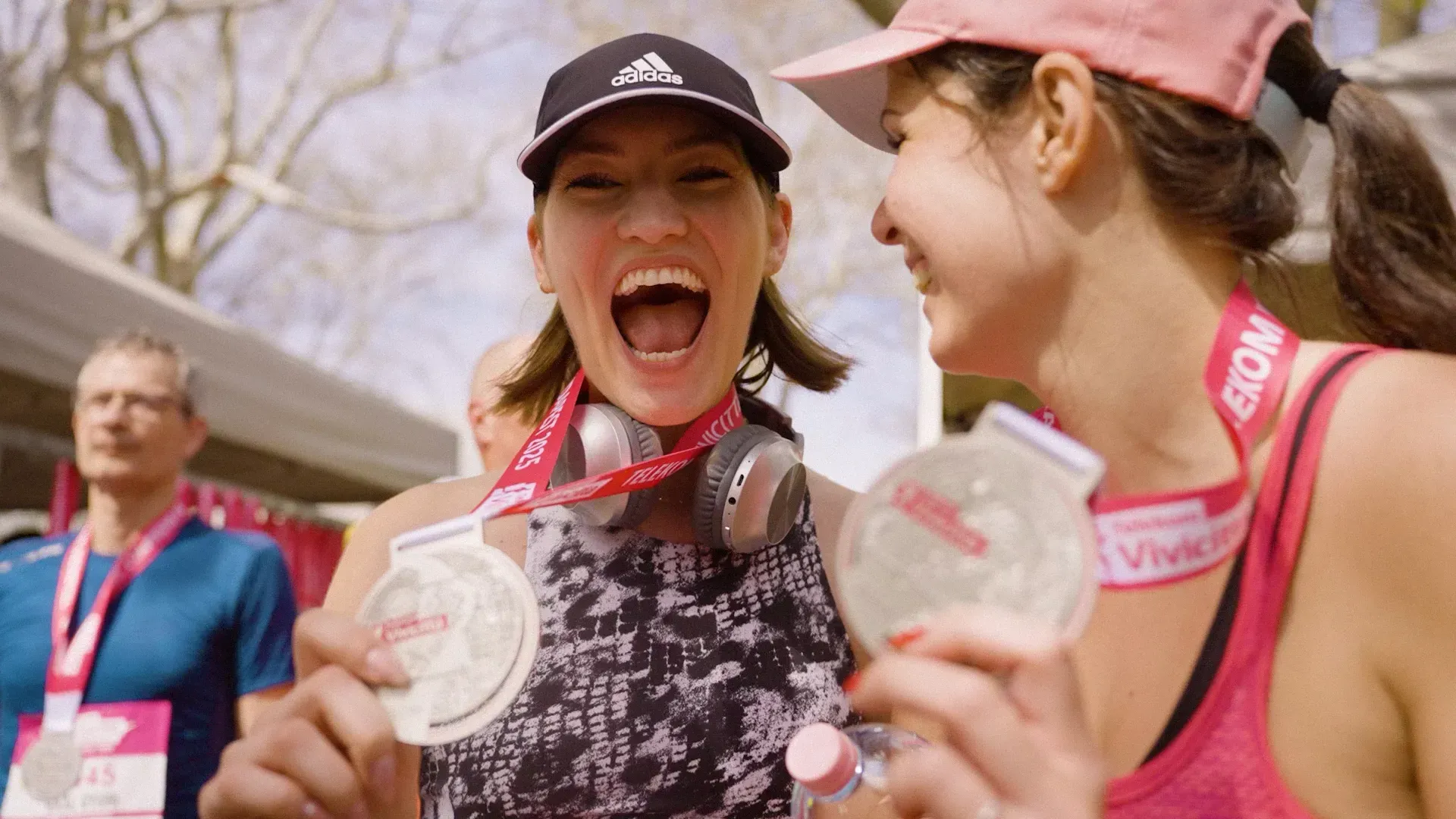
- Personalized Nemzeti Sport front pages
Each runner received a custom cover of Nemzeti Sport featuring:
○ their photo,
○ their individualized “best-in” headline,
○ and a tailored performance summary.
This turned a traditionally elite-only space into a mass stage for everyday achievement.
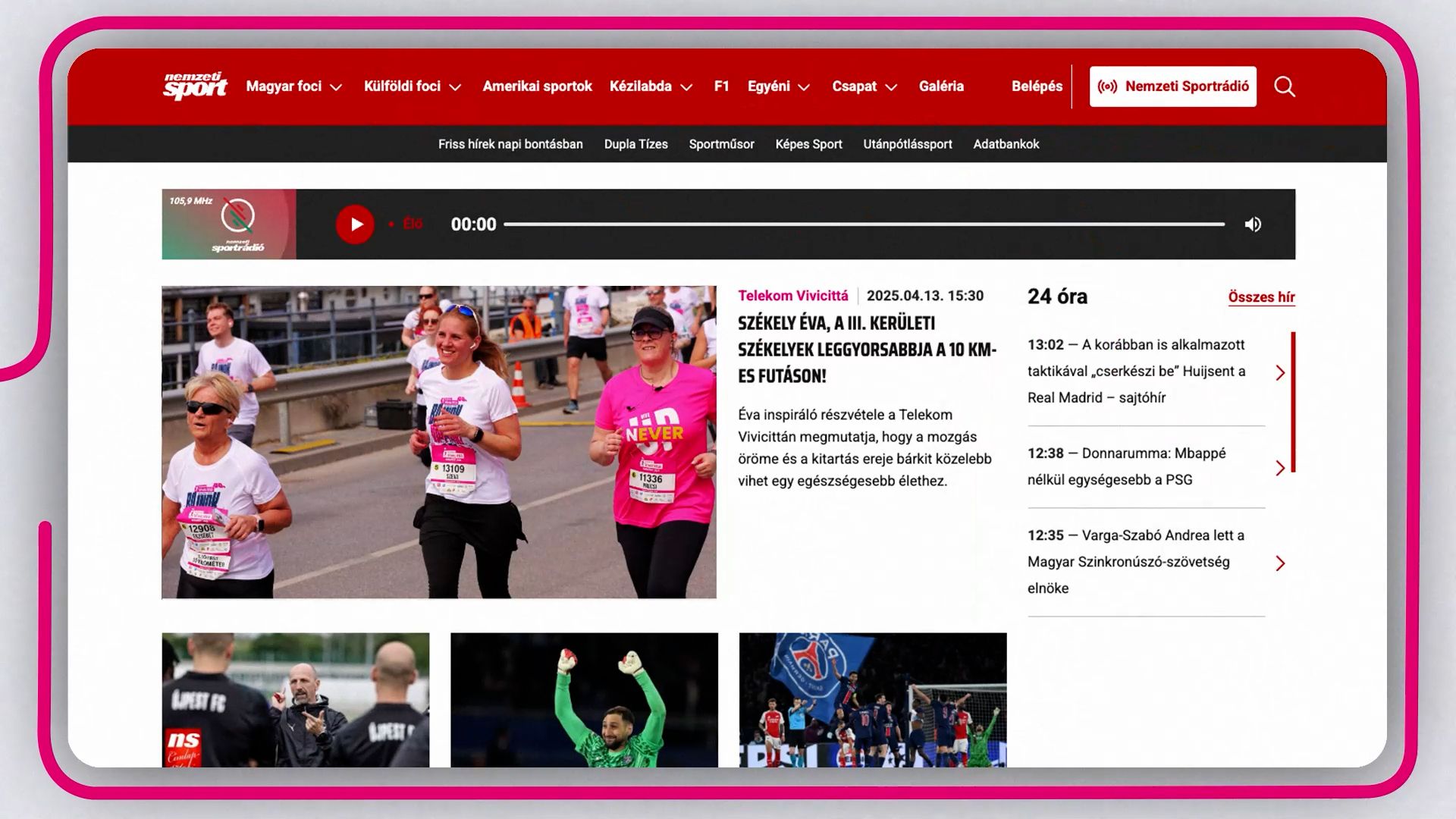
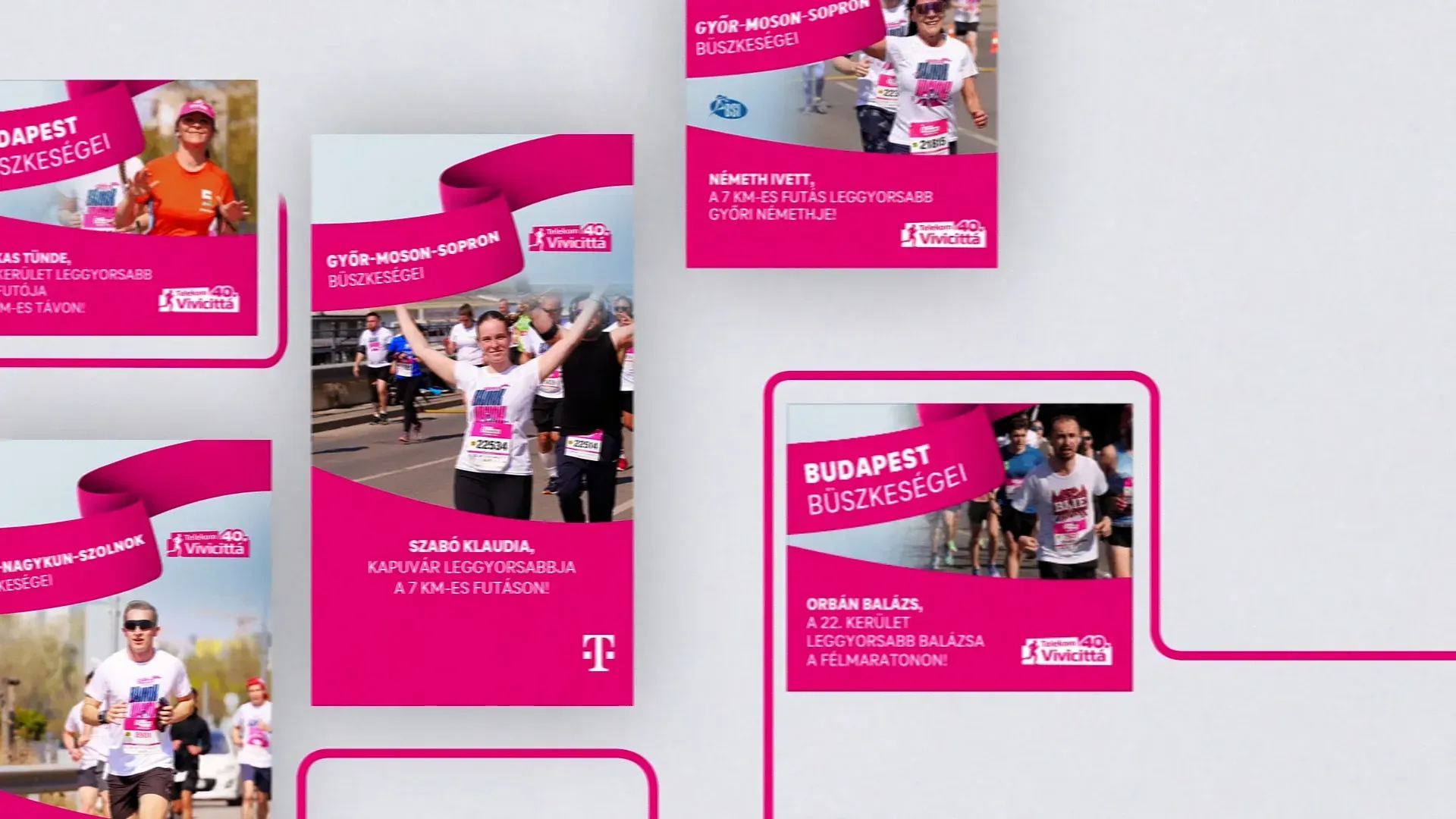
2. Large-scale public visibility To extend impact beyond the runners:
○ hundreds of participants were selected for geotargeted display and social ads,
○ appearing in the neighbourhoods where they live and work.
The goal: create social reinforcement, community pride, and visible proof that “being the best” is accessible to all.
Impact
By reframing performance from absolute to relative and personal, Telekom effectively broadened the concept of recognition in mass sport participation.
The initiative:
○ challenged a deeply rooted cultural narrative,
○ made achievement feel attainable for inactive audiences,
○ and demonstrated how data-driven communication can contribute to public-health motivation at scale.
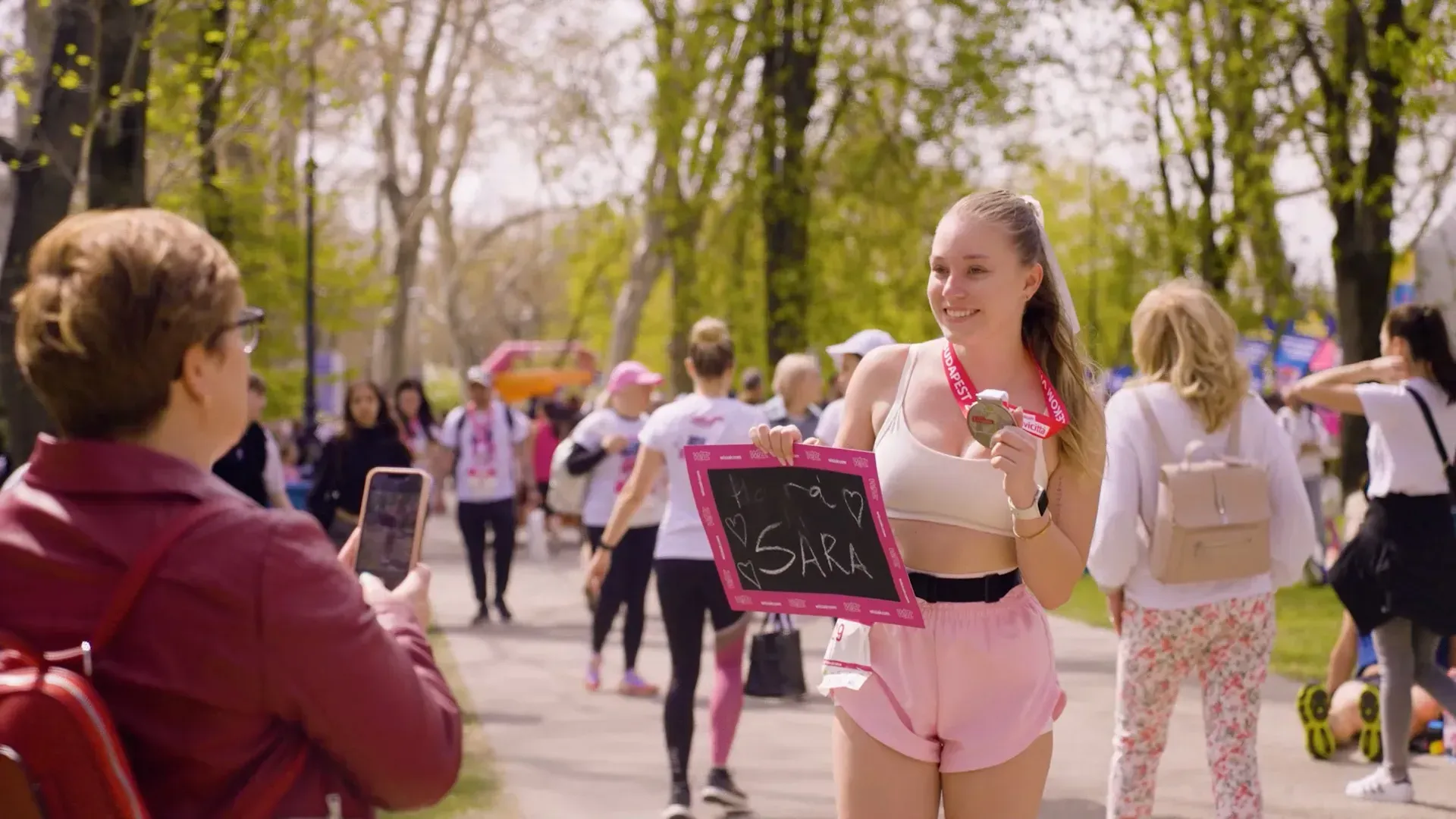
Watch our case study video 👉
Related projects
Slide 1 of 3: Unspotted Spots: hidden in plain sight

Unspotted Spots: hidden in plain sight
It’s not often we take pride in a campaign that millions of people saw, yet no one actually noticed. But that’s exactly what happened. Below, we’ll take you behind the scenes of Telekom’s Unspotted Spots campaign: how it started, how it unfolded, and why we hid the whole thing in plain sight.
Now you.
Enough about what we’ve done. What have you got in mind? A campaign, a product, a big what-if? Our Growth Partners know their way around the industry. And they’re all ears.